Interactive Storytime With Personalized Books
Interactive Storytime With Personalized Books
Interactive Storytime With Personalized Books
Ever start a story and notice your child drifting away after a page or two? You are not alone. For many families, the biggest storytime challenge is not finding books. It is helping children stay engaged long enough to enjoy the story and make meaning from it.
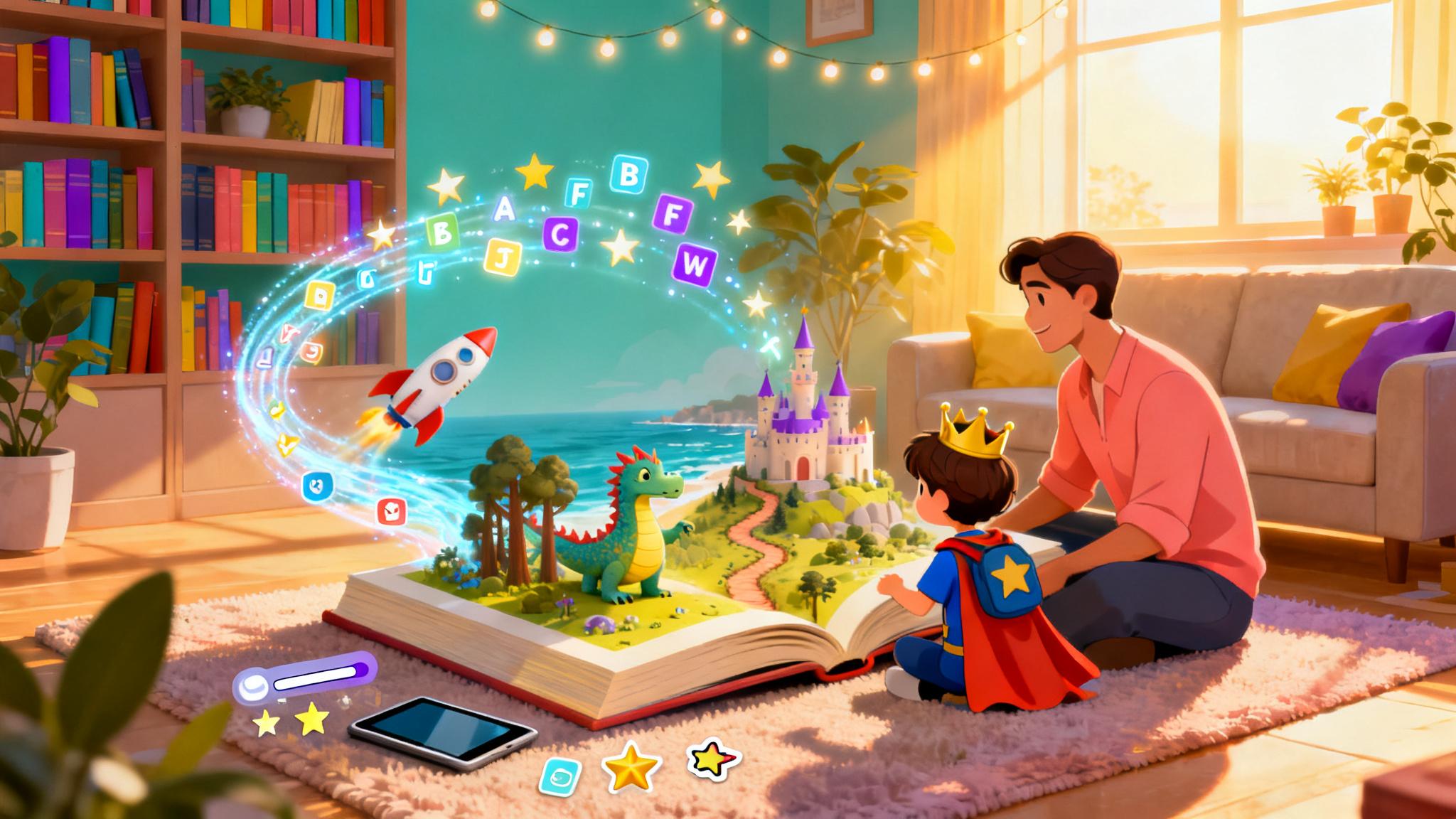
Interactive storytime is a simple, practical approach that turns reading into a shared activity instead of a one way performance. You can invite your child to point, guess, repeat, act out, and talk back to the book. This kind of participation can help keep attention on the page, build positive reading habits, and make books feel like something children do with you, not something done to them.
Personalized children’s books can fit naturally into this style of reading because personalization may make the story feel more relevant right away. For example, Pictoora can place a child’s first name throughout the story, helping make the child part of the adventure. That small detail can become a bridge into more interaction: spotting their name, predicting what “they” will do next, and connecting events in the story to their own experiences.
Below you will find easy, repeatable ways to make storytime more interactive using any picture book, plus a few ideas that work especially well with personalized stories. Choose a couple to try this week, keep what works, and let the rest go.
What “interactive storytime” really means
Interactive storytime is simply reading with conversation and participation built in. You still read the story, but you also pause at natural moments to include your child. The goal is not to quiz them or turn reading into a lesson. The goal is to help them stay involved and enjoy following the story.
Good signs your storytime is interactive
- Your child points at pictures or turns pages.
- Your child answers with single words or short phrases, even if they are silly.
- You both make sound effects, repeat favorite lines, or act out scenes.
- You pause for a moment and your child pulls you back to the book.
A note on age and attention
Interactive storytime can work at many ages, but the type of interaction changes. A toddler may mostly point and label. A preschooler may predict and tell parts of the story. An early reader may notice repeated words or talk about why a character made a choice.
Before you start: set up an easy win
A small reset to your routine can make interaction easier. You do not need a perfect reading nook. You need a comfortable spot where you can both see the pages and pause without feeling rushed.
Quick setup checklist
- Pick one book that feels short enough to finish.
- Let your child choose where to sit, even if it is the couch instead of the bed.
- Hold the book so your child can see the pictures clearly.
- Aim for a calm pace and short pauses rather than long interruptions.
Five interactive prompts that work with any book
If you want storytime to feel natural, rely on a few simple prompts you can reuse across many books. Here are five that keep things light and playful.
1. “What do you notice?”
Invite your child to look closely at an illustration. This is especially helpful in picture books where the art carries part of the story.
- What do you see on this page?
- What is different from the last picture?
- Can you find something red, round, tiny, or tall?
2. “What do you think will happen next?”
Prediction keeps attention on the story. There is no wrong answer. The point is to practice following the plot and building curiosity.
- What do you think they will do now?
- Where do you think they are going?
- What might be behind the door?
3. “Show me” prompts
These are great for wiggly readers because they add movement without leaving the story.
- Show me the character’s surprised face.
- Can you roar like the creature in the picture?
- Can you tiptoe like the character?
4. “Let’s say it together”
Repeated lines, sound effects, and rhymes are perfect for shared reading. If the book does not have a repeated line, you can create one..
- Pick one fun phrase and repeat it the same way each time.
- Do a sound effect whenever a certain thing appears, like a whoosh for a rocket.
5. “Why do you think…?” in simple form
Keep it gentle and age appropriate. Even a one word answer counts.
- Why is the character happy?
- Why are they hiding?
- How do you think they feel right now?
How personalized children’s books can add extra participation
Personalized stories are not required for interactive reading, but they can give you a few extra entry points, especially for children who love hearing familiar details. When a child’s name appears in the text, it can naturally create moments for noticing and responding.
Try these interactions when your child’s name appears
- Name spotting. Pause and let your child point to their name on the page.
- Echo reading. You read the sentence and your child repeats just their name or a key phrase.
- Prediction. Ask, what will you do next in the story?
- Connection. Ask, have you ever done something like that?
Pictoora can place a child’s first name throughout the story, helping make the child part of the adventure. If you are browsing personalized options, you can start here: https://pictoora.com
A simple interactive storytime flow you can repeat nightly
If you want a routine that feels easy, follow a predictable pattern. Children often enjoy knowing what is coming next.
- Cover chat. Look at the cover and ask one question: what do you think this is about?
- Page one pause. After the first page, ask: what do you notice?
- Mid story guess. About halfway through, ask: what might happen next?
- Favorite part. Near the end, ask: which page was your favorite?
- One quick recap. You say: first this happened, then this happened. Let your child add one detail.
This routine is short, flexible, and works even when you are tired. Most nights you will only do two or three of the steps, and that is still a win.
Interactive ideas by age, kept simple
| Age range | Best interaction types | Example prompt |
|---|---|---|
| Toddlers | Pointing, labeling, sound effects | Show me the dog. What sound does it make? |
| Preschoolers | Prediction, feelings, simple retells | How do you think they feel? What happens next? |
| Early readers | Spotting repeated words, noticing punctuation, retelling | Can you find the word again? Why is there an exclamation point? |
Common pitfalls and easy fixes
Pitfall: asking too many questions
If storytime starts to feel like a quiz, children may shut down. Try one prompt per page spread, or only a few prompts for the whole book.
Pitfall: correcting every answer
Interactive reading is about participation, not perfection. If your child calls a leopard a cheetah, you can respond warmly and model the right word later without stopping the flow.
Pitfall: finishing the book no matter what
It is okay to stop early. You are building a positive reading relationship. Some nights, two pages with great engagement is better than twenty pages with frustration.
FAQ
How long should interactive storytime be?
Long enough to feel enjoyable and short enough to end on a positive note. For some children that is five minutes, for others it is twenty. Consistency matters more than length.
Do I need a personalized book to do interactive storytime?
No. You can use any picture book. A personalized children’s book can add extra moments for noticing and participation, but the interaction comes from how you read together.
What if my child will not answer questions?
Try prompts that do not require talking, like show me, point to, or can you find. You can also answer your own question out loud to model the idea, then pause briefly to invite your child in.
Can we reread the same personalized story again and again?
Yes. Repeated reading is a well known way to build familiarity with a story’s language and structure. If your child asks for the same book, you can keep it fresh by changing the questions you ask or focusing on different pictures each time.
How can I use my child’s name in the story without overdoing it?
Treat the name as an invitation, not a spotlight. Pause occasionally for name spotting or a quick prediction, then keep reading so the story stays smooth and fun.
Conclusion
Interactive storytime is one of the easiest ways to help books feel lively, shared, and worth returning to. You do not need a complex plan. You just need a few prompts and the willingness to pause and let your child join in.
- Use simple prompts like what do you notice and what happens next.
- Add movement with show me questions and sound effects.
- Keep it light, short, and repeatable.
- Consider a personalized children’s book for extra name spotting and participation moments.
If you want to try a story where your child’s first name appears throughout the adventure, explore Pictoora here: https://pictoora.com. Then tell us which interactive prompt worked best for your next storytime and why.