How Personalized Books Help Early Literacy Development
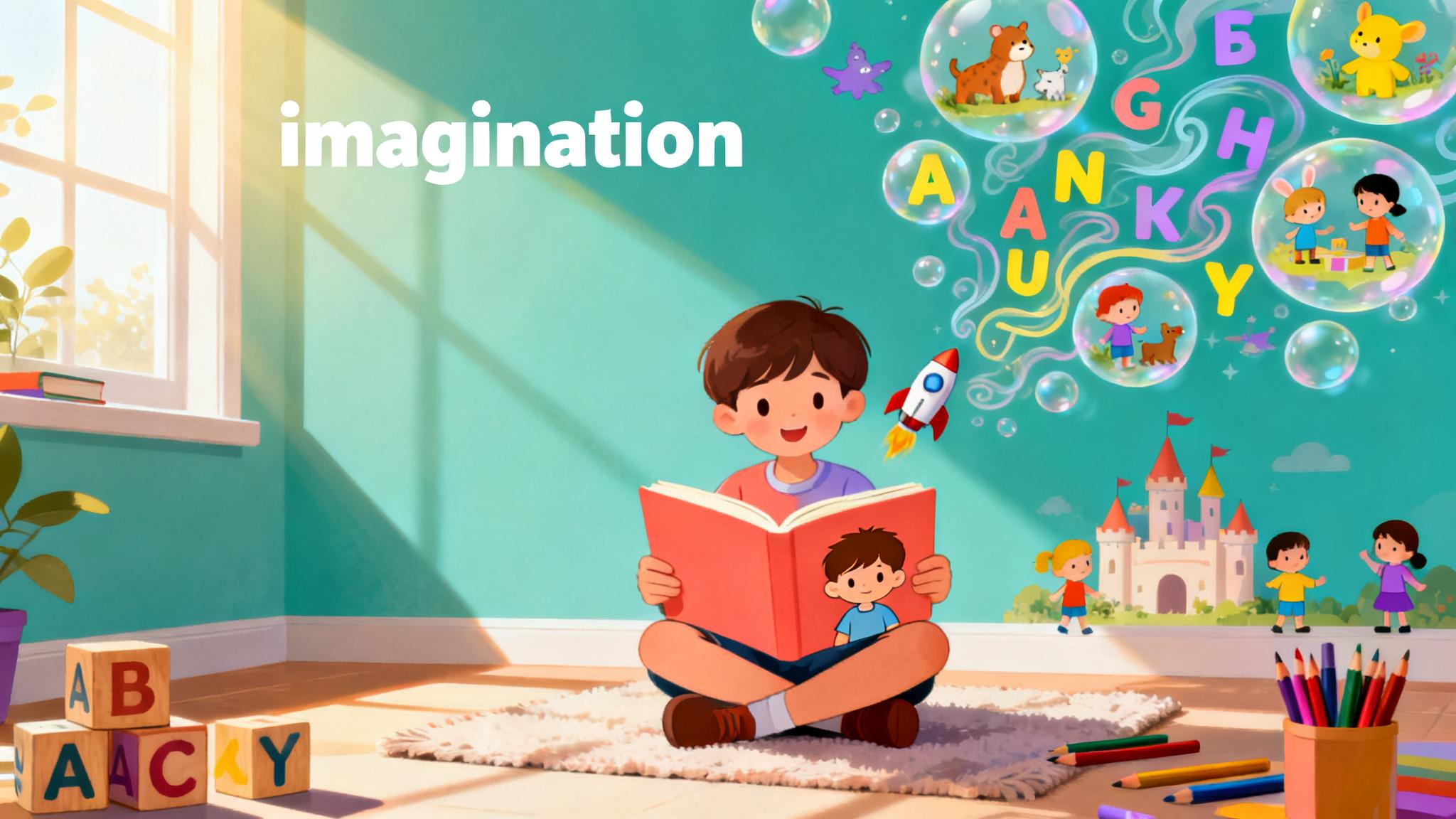
How Personalized Books Help Early Literacy Development
How Personalized Books Help Early Literacy Development
You finally hear it: your child “reading” a favorite story out loud. Except they are not decoding every word yet. They are using memory, pictures, and a few recognizable letters to tell the story in their own way. If you have wondered, “Is this real reading progress?” the reassuring answer is yes. Those early attempts are a major milestone, and what you read together can either accelerate or stall that momentum.
Personalized children’s books can be a powerful tool for early literacy development because they make stories feel immediately meaningful. When your child’s name, appearance, or familiar details show up on the page, attention and motivation often rise. And motivation matters in literacy: children learn faster when they are eager to come back to the same book repeatedly, practice new words, and talk about the story.
In this post, you will learn how personalized books support foundational reading skills like print awareness, vocabulary, phonological awareness, comprehension, and storytelling. You will also get practical, parent-friendly ways to use personalized stories at home, even if your child is not “reading” independently yet. Think of this as a warm, low-pressure path to building a confident early reader.
Why personalized books can strengthen early literacy skills
Early literacy is not just about reading words on a page. It is a bundle of skills that develop over time, usually through shared reading and conversation. Many children benefit from repetition, predictable story patterns, and emotional engagement. Personalized books naturally increase engagement because the story feels like it is “about me,” which can lead to more frequent rereading.
Research in early childhood education consistently shows that shared book reading supports language growth and later reading achievement, especially when adults use interactive techniques like asking questions, labeling pictures, and expanding on what a child says. Personalization can make those interactions easier because the child is more likely to point, comment, and stay involved. That extra back-and-forth talk is where a lot of literacy learning happens.
Key literacy building blocks supported by personalized stories
- Print motivation: Your child wants to read because the book feels relevant and fun.
- Vocabulary growth: Familiar contexts plus new words help children learn word meanings faster.
- Comprehension: Children connect events to their own experiences, making the story easier to follow.
- Phonological awareness: Hearing their name and other repeated phrases draws attention to sounds.
- Narrative skills: Children practice telling a beginning, middle, and end, a key pre-reading skill.
Benefit spotlight: personalized books and print motivation
If you have ever tried to start bedtime reading when your child is wiggly, tired, or fixated on something else, you have seen how motivation can be the biggest hurdle. Personalized books often reduce that friction. When the main character shares your child’s name and details, the book captures attention quickly, and your child is more likely to request it again tomorrow.
That rereading is not a problem. It is practice. Each reread strengthens familiarity with story structure, repeated phrases, and new vocabulary. Over time, many children begin to “read” parts of the book from memory, then transition to noticing letters and words that stay the same on every page. This is a natural bridge toward independent reading.
How personalized stories support reading skills at different ages
Ages 2 to 3: building language and book habits
At this stage, the goal is not decoding. It is building positive feelings around books, improving listening, and growing vocabulary. Personalized stories encourage pointing, naming, and commenting. When your child says, “That is me,” they are practicing a core comprehension skill: connecting text to self.
Ages 4 to 5: strengthening phonological awareness and story structure
Preschoolers are often learning rhymes, syllables, and beginning sounds. Seeing their name in print can be especially motivating, and repeated phrases in personalized stories help them notice patterns in language. Many children also start retelling the story, which supports later reading comprehension and writing.
Ages 6 to 7: early decoding and fluency support
Once children begin sounding out words, a familiar personalized book can feel “easier” because the story is predictable. That familiarity can boost confidence and encourage practice. For early readers, successful practice sessions matter. They build fluency, accuracy, and stamina.
Practical ways to use personalized books for early literacy at home
You do not need special training to turn a personalized story into a literacy-rich moment. Small tweaks in how you read can amplify learning without making storytime feel like a lesson.
1) Do a “name hunt” to build print awareness
Before you begin, flip through and ask your child to find their name. Point to it with your finger as you say it.
- Say: “Here is your name. It starts with the same letter as…”
- If your child is older, ask what sound the first letter makes.
2) Use the pause and prompt method to grow vocabulary
When you hit an interesting word, pause briefly and give a child-friendly explanation.
- Example: “Brave means you try even when you feel a little scared.”
- Then connect it to their life: “When were you brave this week?”
3) Turn the story into a prediction game
Comprehension grows when children practice anticipating what comes next.
- Ask: “What do you think will happen on the next page?”
- Follow up: “Why do you think that?”
Because your child is the hero, they are often eager to stay engaged and guess what “they” will do next.
4) Reread on purpose using a simple weekly plan
Repetition is where many children pick up new language and story structure. Try a low-effort routine:
- Night 1: Read straight through for enjoyment.
- Night 2: Pause to talk about pictures and feelings.
- Night 3: Let your child “read” familiar lines or fill in repeated phrases.
- Night 4: Retell the story together without the book.
This builds comprehension, sequencing, and confidence while keeping things fun.
5) Create a “story to real life” bridge
Personalized books make it easy to connect reading to your child’s world, which supports deeper comprehension.
- After reading, ask: “What was your favorite part?”
- Then: “What would you do if you were really there?”
- Finally: “Can we draw a new page for the story?”
Quick comparison: standard books vs personalized books for early literacy
| What kids practice | Standard storybooks | Personalized children’s books |
|---|---|---|
| Motivation to reread | Varies by interest | Often higher because the child is the hero |
| Print awareness | Name recognition may not apply | Name in print becomes a built in attention grabber |
| Comprehension talk | Depends on connection to the story | Easier to connect events to the child’s experiences |
| Confidence with early reading | Some children feel pressure | Familiarity and ownership can reduce anxiety |
Subtle ways to bring our personalized books into your routine
If you are building a home library with an early literacy focus, consider adding a few personalized children’s books that match your child’s current interests: animals, bedtime adventures, school readiness, or friendships. Choose stories with clear story arcs, warm illustrations, and repeated phrases your child can learn and “read” back to you.
If you would like to make storytime more engaging this month, explore our collection of custom stories and pick one that fits your child’s age and current milestone. A well chosen personalized book can become the one they ask for again and again, and that is where reading growth often starts.
Conclusion
Early literacy grows through connection, repetition, and conversation, not perfection. Personalized books can make those ingredients easier to find because your child feels seen inside the story. Over time, that motivation can translate into real skill building.
- Higher engagement can lead to more frequent rereading.
- Rereading supports vocabulary, comprehension, and story structure.
- Name recognition strengthens print awareness and letter interest.
- Interactive reading builds the language foundation for decoding later.
If you are ready to support early literacy development in a way that still feels cozy and fun, explore our personalized children’s books and choose a story your child will want to live in.
Have you noticed reading changes in your child lately? Share what you are seeing, or tell us what kind of story your child would be excited to star in.