How Personalized Books Support Name Recognition
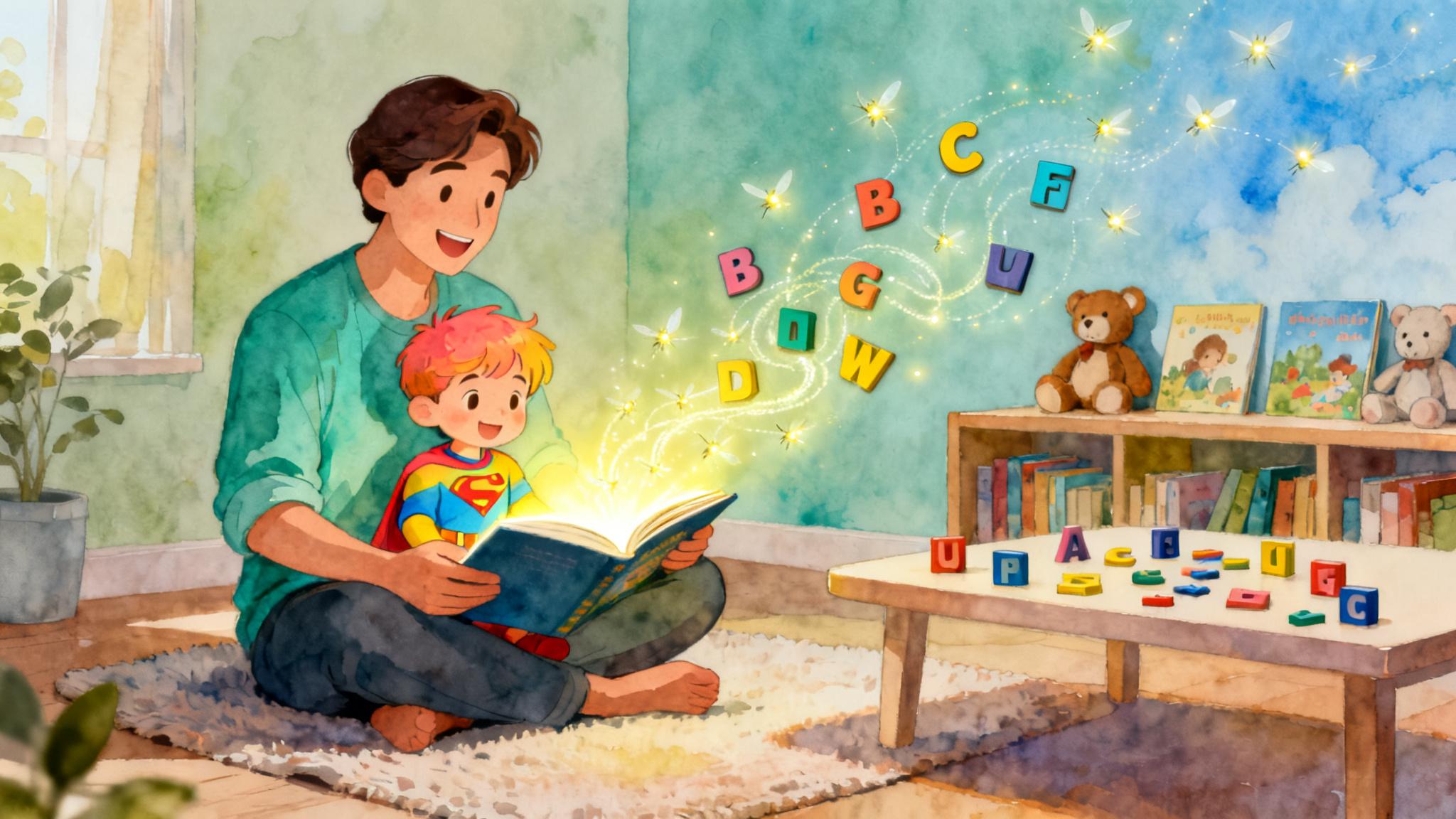
Learning to recognize their own name is one of the first “reading-like” skills many young children practice. You might see it when they point to the letters on a bedroom sign, notice their name on a cubby label, or ask you to write it again and again. Storytime can be a natural place to reinforce that interest, especially when a child’s name shows up in print as part of the narrative. Personalized children’s books can make the words on the page feel more relevant, which may encourage kids to pay closer attention, participate more, and return to a story for repeat reads.
Why name recognition matters in early reading
Name recognition is not the same as reading, but it can be an important bridge toward print awareness. When children spot their name in different places, they start to notice that:
- Print carries meaning. Those marks on the page are not just decoration.
- Letters appear in a consistent order. Their name looks the same each time you write it.
- Words have boundaries. A name is a “chunk” of letters separated by spaces from other words.
- Some words are highly meaningful. A child’s name is usually the first word they feel strongly connected to.
During shared reading, you can build on these ideas gently. The goal is not to turn storytime into a lesson, but to weave small moments of attention to print into an enjoyable routine.
How personalized children’s books can encourage engagement
Personalization can add a familiar anchor to a story. When a child hears their own name in the text, they may perk up, listen more closely, or want to see where the name appears on the page. That extra attention can create more opportunities for you to point to words, track text left to right, and talk about what’s happening in the pictures.
With Pictoora, a child’s first name can appear throughout the story, helping them feel like they are part of the adventure. Many families find that this simple detail makes storytime feel more personal and encourages kids to “own” the book as something made for them.
Personalization vs. good reading habits
It helps to separate what is well established from what is simply a helpful possibility. Reading aloud, re-reading favorites, and talking about pictures are reliable ways to support language and comprehension. Personalization is not a guarantee of a specific outcome, but it can be a practical tool to make a child more eager to participate, which gives you more chances to use those proven read-aloud habits.
Practical ways to use a child’s name during storytime
If you have a personalized book (or even a regular book that features your child’s name in a dedication), try these simple techniques. They are quick, playful, and easy to repeat.
1) Do a “name hunt” before you start
Before reading, flip through a few pages and say, “Let’s see if we can find your name.” When your child spots it, trace under the name with your finger. If they are very young, you can do most of the finding and let them do the pointing.
2) Point to the name as you read it
When you reach your child’s name in the sentence, pause briefly and touch the word. This connects spoken language to printed words without stopping the story for too long.
3) Compare the name to a familiar label
If your child has their name on a backpack tag or bedroom door, mention it casually: “This looks like the name on your backpack.” Keeping the comparison concrete helps children understand that the same word shows up in many places.
4) Notice the first letter
For preschoolers, focusing on the first letter is often enough. Try: “Your name starts with M. Do you see the M here?” If your child is interested, you can also look for that letter elsewhere on the page, but follow their attention span.
5) Celebrate close attempts
If your child points to a different word and insists it is their name, you can respond warmly: “Good looking. Your name is over here. It starts with this letter.” The aim is confidence and curiosity, not perfection.
Making repeated reading feel fresh (without changing the book)
Many young children love reading the same story again and again. Repeated reading can be valuable because it builds familiarity with the sequence of events, repeated phrases, and story language. A personalized story that features your child’s name may be especially appealing for repeat reads. To keep it engaging for you and your child, vary what you focus on each time.
- First read: Enjoy the story and pictures. Keep it smooth and fun.
- Second read: Do a quick “name hunt” on a few pages.
- Third read: Ask one simple prediction question: “What do you think happens next?”
- Fourth read: Let your child “read” one repeated line with you, or fill in the last word of a sentence.
- Fifth read: Focus on a few illustrations: “What do you notice in this picture?”
These small shifts can help a familiar book continue to feel interesting while still giving your child the comfort of a known story.
Questions that invite participation without interrupting the flow
Some kids love to talk during books, and others prefer to listen quietly. Either is fine. If you want to encourage engagement, try questions that can be answered with a point, a single word, or a short phrase.
- Pointing questions: “Can you show me your name?” “Where is the dinosaur?”
- Choice questions: “Is the character happy or worried?” “Is it day or night?”
- Prediction questions: “What do you think the character will do next?”
- Connection questions: “Have you ever seen something like that?”
If your child gets absorbed in the story, you do not need to ask many questions. One or two moments of interaction are often enough to make the book feel shared.
Choosing personalized books with early readers in mind
When you are selecting a story for name recognition and early literacy habits, look for books that naturally support shared reading.
- Clear, readable text. Bigger print and good spacing help when you point to words.
- Strong illustrations. Pictures give children a way to “read” the story through visual clues.
- A storyline your child enjoys. Interest drives attention, and attention makes it easier to notice print.
- Opportunities for repetition. Repeated phrases or patterns invite children to join in.
If you are exploring options, personalized children’s books can be a meaningful fit for storytime because your child’s first name appears throughout the adventure, creating natural moments to point, notice, and participate.
Keeping storytime warm, low pressure, and consistent
The most helpful reading routine is usually the one you can actually maintain. A few minutes after dinner, a book before bed, or a weekend morning read on the couch can all work. If your child is wiggly, it is okay to read a shorter section, talk about one picture, or even just enjoy the pages together. Over time, those small, positive experiences can make books feel familiar and inviting.
If you want to add a personal touch to your routine, you can find a story that includes your child’s first name throughout the text by browsing Pictoora’s personalized storybooks. A name on the page can be a simple, joyful way to encourage participation and make reading together feel like something made just for your family.