Storytime Questions to Ask Kids While Reading
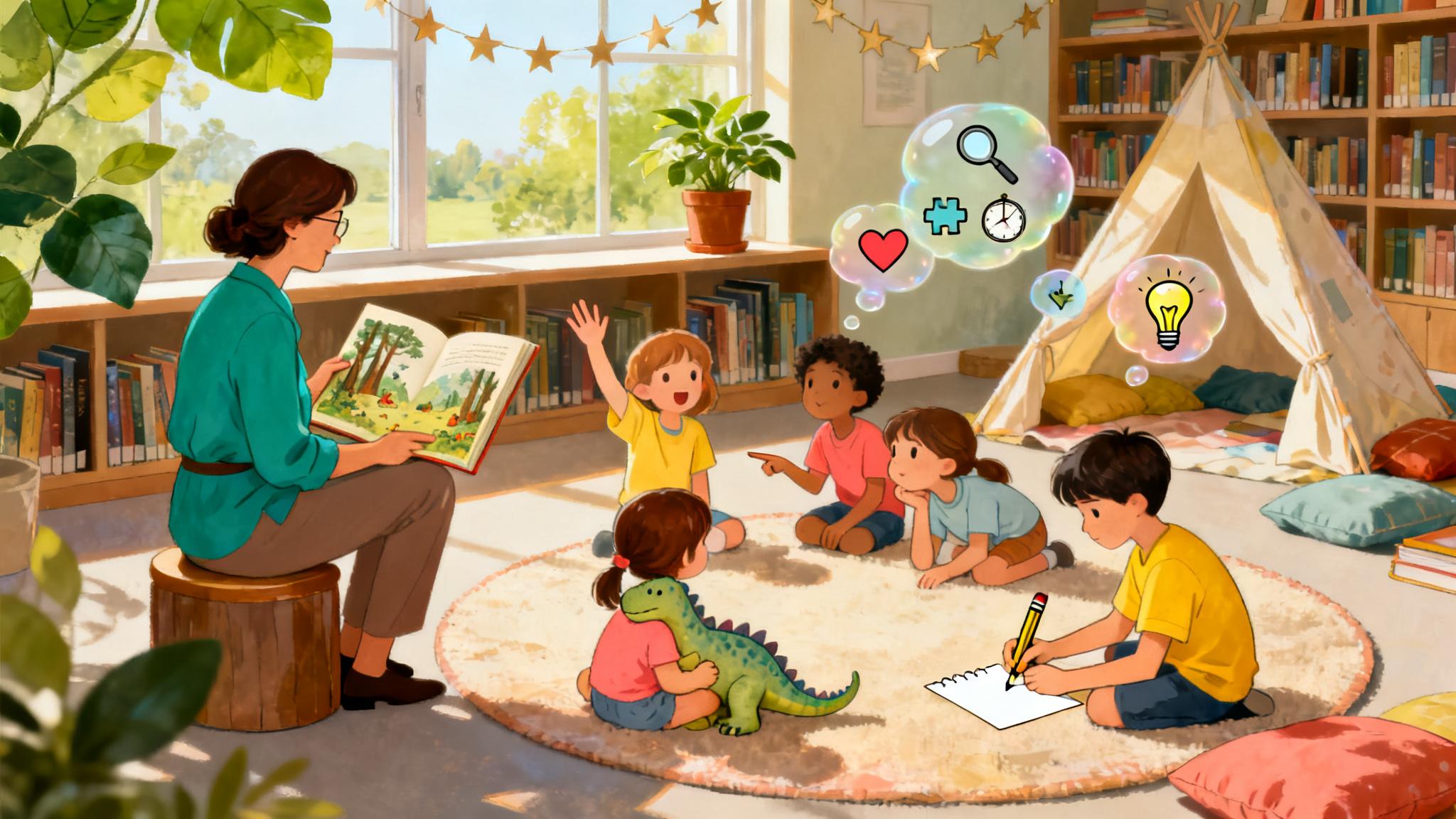
One of the easiest ways to make storytime more engaging is to pause and talk about what you are reading together. The right questions can turn a book into a shared conversation, help your child notice details in the pictures, and invite them to predict what might happen next. You do not need a long lesson or a perfect script. A few simple prompts, asked at the right moments, can make reading aloud feel cozy, interactive, and fun for kids of many ages.
How to use storytime questions without interrupting the flow
Questions work best when they feel like part of the story, not a quiz. Try asking just one or two per page spread, then keep reading. If your child is deeply focused, save the questions for a natural pause or the end of a scene.
- Keep it short. One sentence is often enough.
- Let “I don’t know” be okay. Offer choices or model an idea.
- Follow their interests. If they want to talk about the dragon on page three, go with it.
- Use the pictures. Pointing to an illustration can help toddlers answer.
Before you start: quick questions that build anticipation
These are great for the cover, first page, or dedication page. They warm up your child’s imagination and invite them into the story world.
- “What do you think this book will be about?”
- “What do you notice first on the cover?”
- “Who do you think the main character is?”
- “Where do you think the story takes place?”
If you are reading a story where your child’s name appears throughout, you can add: “How do you think you will feel in this adventure?” That personal touch can make storytime feel extra special, like the book was made just for them.
During reading: questions that keep kids engaged
1) “What do you think will happen next?”
Prediction questions help kids stay curious. Use them before a page turn, during a problem in the story, or right before a big moment.
- “What do you think they will do now?”
- “What would you do if you were there?”
2) “How can you tell?”
This encourages children to point to clues in the words or pictures, even if they are not reading independently yet.
- “How can you tell the character is surprised?”
- “What in the picture shows it is nighttime?”
3) “What is your favorite part on this page?”
This is an easy, low pressure way to invite conversation. It also works well when you are short on time but still want interaction.
- “Which detail do you like best?”
- “If you could step into this picture, what would you do first?”
4) Character feelings and choices
Talking about characters can make stories feel more relatable without turning it into a big discussion.
- “How do you think they feel right now?”
- “Why do you think they made that choice?”
- “What could they try instead?”
After the story: simple wrap up prompts that invite imagination
These are great for bedtime reading because they can be calming, creative, and brief. Choose one and keep it light.
- “What was the biggest problem in the story?”
- “Who was your favorite character and why?”
- “If the story had one more page, what would happen?”
- “What would you name a sequel?”
You can also try a “replay” question: “Can you tell the story back to me using the pictures?” Let your child flip pages and narrate. This works especially well with familiar favorites you reread often.
Storytime question ideas by age
Toddlers (1 to 3)
- Point and name: “Where is the cat?”
- Sound play: “What sound does the cow make?”
- Choice questions: “Is it big or small?”
Preschoolers (3 to 5)
- Prediction: “What do you think will happen next?”
- Feelings: “How do you think they feel?”
- Observation: “What do you notice in the picture?”
Early readers (5 to 7)
- Reasons: “Why do you think that happened?”
- Cause and effect: “What did they do that changed things?”
- Alternate endings: “What would you change?”
Make it more personal with a name in the story
If your child lights up when they recognize their name in a book, a personalized story can make those storytime questions even more exciting. Pictoora creates premium personalized children’s storybooks where a child’s first name can appear throughout the adventure. Many families also like adding a short dedication, and where available, an optional photograph on the dedication page.
When the story includes your child’s name, try questions like: “What would you do next, if you were the hero?” or “Which part felt most like you?” If you want to browse options, explore personalized children’s books and pick a theme your child already loves, like dinosaurs, unicorns, farm animals, bedtime stories, or big adventures.
Tonight, choose just three questions to try. Keep it cozy, follow your child’s lead, and enjoy the extra conversation that grows naturally from the pages. When you are ready for a story that feels even more personal, you can find a new favorite among children’s personalized stories.